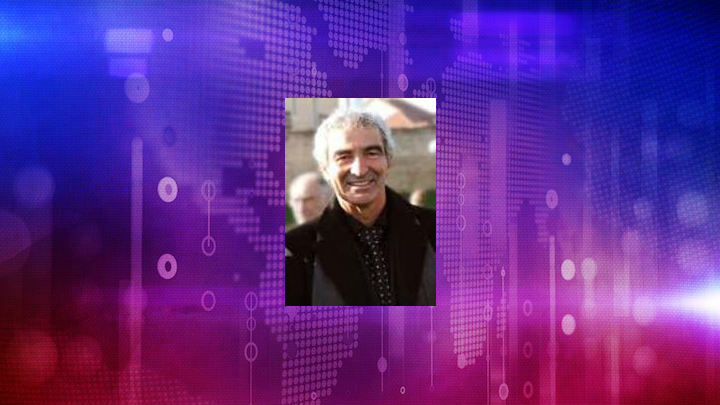
Raymond Domenech's Wealth: Journey from Lyon Player to National Manager
Raymond Domenech. The name evokes a mix of respect for a decorated playing career and controversy for his tumultuous tenure as France's national football team manager. But beyond the headlines and the touchline drama, a fascinating financial journey underpins his life in football. From his early days as a steadfast defender for Lyon to leading Les Bleus on the world stage, Domenech’s career trajectory offers a unique lens through which to explore the evolving economics of professional football. While estimates of his ultimate
Raymond Domenech net worth vary, the story of how he built his wealth reflects decades of dedication to the sport.
From the Pitches of Lyon to French International: Domenech's Playing Foundation
Born in Lyon, France, in 1952, Raymond Domenech's footballing odyssey began in earnest in 1969 with his hometown club, Olympique Lyonnais. Over nearly a decade, he established himself as a reliable and versatile defender, capable of playing both right and left-back. During his extensive period with Lyon, he made an impressive 246 appearances, finding the net seven times – a solid contribution for a defender. This formative period laid the groundwork for his professional career, providing him with a consistent salary and the experience that would prove invaluable later.
His talent didn't go unnoticed. In 1977, Domenech moved to Strasbourg, where he continued to be a key player, featuring in 128 games and scoring four goals. His career then took him to the prestigious Paris Saint-Germain for a single season in 1981, followed by two seasons with Bordeaux, and a final professional stint with Mulhouse before his retirement in the mid-1980s.
During the 1970s, Domenech's solid performances also earned him a call-up to the French national team, where he made eight appearances for his native country. While he didn't score any goals for France, representing his nation was a significant achievement, elevating his profile and likely contributing to higher club salaries. Even though player wages in the '70s and '80s weren't the astronomical figures seen today, a career spanning multiple top-flight clubs and international caps would have ensured a comfortable living, laying a robust financial foundation that would underpin his later wealth accumulation. This period, though modest by modern standards, was crucial in building the initial components of his
Raymond Domenech net worth.
The Managerial Hot Seat: From Club Ranks to the National Stage
Retirement from playing didn't mean an exit from football for Raymond Domenech; instead, it marked the beginning of an even more impactful, and financially rewarding, chapter: management. His first foray into coaching began with one of his former clubs, Mulhouse, where he managed until 1989. His success there led him back to Olympique Lyonnais, this time as manager, a role he held until 1993. These early managerial roles, while not as high-profile as his later positions, were critical for honing his leadership skills and gaining valuable experience.
Following his time at Lyon, Domenech dedicated over a decade to managing a local youth team. This period, often overlooked, highlights his long-term commitment to football development and character building, before the ultimate call came in 2004: to manage the French national team. This appointment was a monumental step, not just in his career but also in significantly boosting his potential earnings. Managing a national team, especially one with France's pedigree, comes with a substantial salary, performance bonuses, and numerous commercial opportunities.
Domenech's tenure as national manager was a rollercoaster. He famously guided France to the 2006 FIFA World Cup final, an incredible achievement where they ultimately lost to Italy in a dramatic penalty shootout. This success undoubtedly brought significant bonuses and cemented his reputation, at least temporarily, as a top-tier manager. However, the 2010 FIFA World Cup proved to be a disastrous affair. The French side failed to progress from the group stage without a single win, marred by player boycotts of practice and a highly publicized refusal by Domenech to shake hands with the opposing coach after France's elimination. This controversial exit led to his dismissal and left a lasting, often negative, mark on his legacy. Despite the controversy, his years at the helm of the national team were undeniably the most financially lucrative period of his career, contributing substantially to his overall
Raymond Domenech net worth.
Deconstructing Raymond Domenech's Net Worth: Why Estimates Vary Wildly
Pinpointing an exact figure for a public figure's net worth, especially one who has retired from the most active phases of their career, is notoriously challenging. This is precisely why estimates for
Raymond Domenech net worth vary so wildly across different sources. Some suggest figures as high as $10 million, while others place it in a much lower range, perhaps between $100,000 and $1 million, or around $4.52 million. These discrepancies highlight several key factors that make wealth estimation an imprecise science:
*
Private Spending and Investments: A significant portion of any individual's wealth is tied up in private assets like real estate, investments, and personal expenses. These are not publicly disclosed and can greatly influence the actual net worth.
*
Taxes and Deductions: Salaries and bonuses are subject to taxes, and the net income can differ significantly from the gross figures often reported.
*
Post-Career Earnings: After his high-profile managerial role, Domenech's income streams would have diversified. This could include media appearances, punditry, potential book deals, or even coaching clinics, though his controversial exit from the national team might have limited some lucrative opportunities.
*
Methodology Differences: Various online estimation sites use different algorithms and publicly available data points, leading to varied calculations. Some might factor in peak earnings more heavily, while others might focus on more recent, publicly known income.
*
Market Fluctuations: Investments can fluctuate, and the value of assets like real estate changes over time, making a static net worth figure difficult to maintain.
Understanding these variables is crucial when interpreting any reported net worth. It’s important to treat these figures as educated estimates rather than definitive statements. For a deeper dive into these estimation challenges, you might find our related article insightful:
Raymond Domenech Net Worth: Why Estimates Vary Wildly for the French Manager. For the most up-to-date projections, check out:
How Much Is Raymond Domenech Worth? Latest 2025-2026 Net Worth Update.
Practical Tip: When researching the net worth of public figures, always cross-reference multiple reputable sources and understand that these figures are often speculative, not audited financial statements. Consider the individual's entire career arc, major career highs, and any known controversies that might affect earning potential.
The Legacy Beyond the Bank Account: A Look at Domenech's Impact
While discussions about
Raymond Domenech net worth are intriguing, his true legacy extends far beyond monetary figures. His impact on French football is undeniable, albeit complex and often polarizing.
The high point of his managerial career, undoubtedly, was guiding France to the 2006 World Cup final. This achievement, coming after a period where the team was rebuilding, showcased his tactical acumen and ability to rally a squad around a common goal. For a generation of French fans, that tournament remains a bittersweet memory, a testament to what might have been.
However, the shadow of the 2010 World Cup controversies looms large. The player revolt, the public spats, and his infamous refusal to shake hands with opposing coach Carlos Alberto Parreira cemented a perception of Domenech as an eccentric and at times volatile figure. Many football pundits and fans consider him among the more controversial coaches in French history, a reputation that certainly affected his public image and likely limited subsequent high-profile coaching or media opportunities.
Despite the controversies, Domenech's longevity in the game, first as a player for significant clubs and then as a manager who reached the pinnacle of international football, speaks volumes about his dedication and understanding of the sport. Now in his early seventies, residing in Lyon, he remains a distinctive character in the annals of French football. His journey is a reminder that a career in professional sports, whether as a player or a manager, can yield substantial financial rewards, even if the path is often fraught with highs and lows, both on and off the pitch.
Conclusion
Raymond Domenech's journey from a young defender for Lyon to the manager of the French national team is a testament to a life dedicated to football. His career, spanning decades, saw him accumulate wealth through consistent playing salaries, and significantly, through the substantial compensation associated with managing a top-tier national squad. While the exact figures for his
Raymond Domenech net worth remain subject to varying estimates, the narrative of his financial progression mirrors his professional ascent, marked by periods of solid earnings and a peak during his tenure with Les Bleus. Beyond the numbers, Domenech's story is one of enduring presence in football, a figure whose legacy, for better or worse, is indelibly etched into the history of French sport.