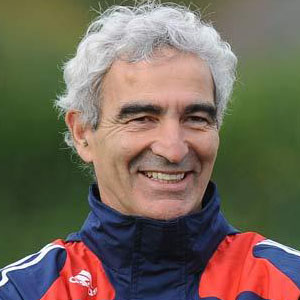
How Much Is Raymond Domenech Worth? Latest 2025-2026 Net Worth Update
Raymond Domenech, a name synonymous with French football, has had a career marked by both significant achievements and profound controversies. From his early days as a steadfast defender for Olympique Lyon to his tenure as manager of the French national team, Domenech has left an indelible mark on the sport. Naturally, with such a high-profile career, public interest often turns to his financial standing. As we approach 2025 and 2026, the question "How much is
Raymond Domenech net worth?" continues to be a popular search. However, pinning down an exact figure proves to be a complex task, with various sources offering differing estimates.
Unpacking Raymond Domenech's Net Worth: The 2025-2026 Projections
Estimating the precise net worth of any public figure can be challenging, and Raymond Domenech is no exception. Public figures' financial details are rarely disclosed in their entirety, and different methodologies can lead to varying figures. For 2025-2026, estimates for
Raymond Domenech net worth reflect this divergence:
* Some sources, looking at potential long-term earnings and historical contracts, have previously cited figures as high as
$10 million dollars. This higher estimate likely encompasses his cumulative earnings over decades as a professional player and, more significantly, as a high-profile national team manager, along with any known investments or assets.
* More recent projections, such as those for March 2026, suggest a figure around
$4.52 Million US Dollars. This estimate is often based on a combination of social factors and available public financial data, though it's typically presented as guidance rather than a definitive statement.
* Another perspective for 2026 provides a broader range, placing his net worth between
$100,000 and $1 Million. This lower, wider range might reflect a more conservative calculation, factoring in post-managerial career earnings, or perhaps a focus on liquid assets versus total assets including long-term real estate or pension funds.
These discrepancies highlight the inherent difficulty in accurately assessing wealth. Factors like personal spending habits, private investments, tax obligations, and the precise value of non-liquid assets are typically not public knowledge. What remains consistent across all assessments, however, is that Domenech's wealth primarily stems from his extensive career in professional soccer – first as a player and then as a highly remunerated manager. For a deeper dive into these variations, you might find
Raymond Domenech Net Worth: Why Estimates Vary Wildly for the French Manager insightful.
From Pitch to Sidelines: Domenech's Illustrious (and Controversial) Career
Raymond Manuel Albert Domenech, born on January 24, 1952, in Lyon, France, carved out a career in football that spanned over four decades. His journey from a promising young player to a national team manager is a testament to his enduring presence in French football.
Early Playing Days and Club Success
Domenech began his senior playing career in 1969 with his hometown club, Olympique Lyon. A versatile right and left full-back, he spent nearly a decade with Lyon, making an impressive 246 appearances and scoring seven goals. His solid defensive play and leadership qualities laid the groundwork for a successful career.
In 1977, he moved to Strasbourg, where he continued to be a key player, featuring in 128 games and adding four goals. His club career also saw him spend a season with powerhouses Paris Saint-Germain in 1981, followed by two seasons with Bordeaux and a final season with Mulhouse before retiring from playing in the mid-1980s. During the 1970s, Domenech also earned the prestigious call-up to the French national team, making eight appearances for his country. His playing career, while not studded with major international trophies, provided a solid foundation and invaluable experience that would later serve him well as a manager.
The Transition to Management: Shaping French Football
Upon hanging up his boots, Domenech swiftly transitioned into management, a move that would ultimately define his legacy and significantly contribute to his overall wealth. He took the reins at Mulhouse, one of his former clubs, until 1989, before moving on to manage Olympique Lyon until 1993. This early managerial experience at club level honed his tactical skills and understanding of team dynamics.
However, it was his appointment as the manager of the French national team in 2004 that catapulted him into the global spotlight and brought the most significant financial rewards. His tenure with Les Bleus was a rollercoaster of emotions and results:
*
2006 FIFA World Cup: A Near Triumph. Domenech famously led France to the 2006 FIFA World Cup final in Germany. Against all odds, with a squad featuring aging legends like Zinedine Zidane, France reached the pinnacle of international football, only to lose a dramatic penalty shootout to Italy. This achievement significantly boosted his profile and, undoubtedly, his earning potential.
*
2010 FIFA World Cup: A Disastrous End. Four years later, the 2010 World Cup in South Africa proved to be an unmitigated disaster. The French side failed to progress from the group stage, managing not a single win. The tournament was marred by internal strife, including a player boycott of practice sessions following a dispute involving Nicolas Anelka and Domenech. The manager's refusal to shake hands with opposing coach Carlos Alberto Parreira after France's elimination loss to South Africa further fueled controversy. Domenech was subsequently dismissed for serious misconduct, and many in France still consider him among the worst national team coaches in their history due to the 2010 debacle.
Despite the ignominious end to his national team career, Domenech coached some of the greatest players in French history, including Zinedine Zidane, and guided the team to a World Cup final. His high-profile managerial roles, particularly with the national team, commanded substantial salaries, making a significant contribution to his overall financial portfolio. To explore the journey of his wealth accumulation in more detail, see
Raymond Domenech's Wealth: Journey from Lyon Player to National Manager.
Factors Influencing Raymond Domenech's Financial Landscape
Several elements contribute to understanding
Raymond Domenech net worth and why estimates vary:
*
Playing Contracts: While player salaries in the 1970s and 80s were not comparable to today's astronomical figures, Domenech's long and consistent playing career across several prominent French clubs would have provided a steady income stream.
*
Managerial Salaries: His roles at Mulhouse, Lyon, and especially with the French national team, would have come with increasingly lucrative contracts. Managing a national team, particularly one with France's prestige, involves substantial compensation, bonuses for performance, and other benefits.
*
Endorsements and Media Appearances: High-profile figures in football often secure endorsement deals, appear as pundits, or engage in media work after their coaching careers. While specific details for Domenech are not publicly detailed in the provided context, such activities could have supplemented his income, particularly after his national team stint.
*
Investments and Assets: Like many individuals with significant earnings, Domenech would likely have made investments in real estate, stocks, or other ventures. The performance of these investments over time would directly impact his net worth.
*
Lifestyle and Expenses: Personal expenditures, including living costs, taxes, and any staff he might employ, are significant factors that reduce net worth. These private financial outgoings are a primary reason why public estimates remain speculative.
Beyond the Numbers: The Legacy and Lasting Impact
At 74 years old (as of 2026), Raymond Domenech continues to be a recognizable figure in French football. His career, especially his time as national team manager, encapsulates the dramatic highs and lows inherent in the sport. The 2006 World Cup final appearance cemented his place in history, showcasing his ability to lead a team to unexpected heights. Conversely, the 2010 World Cup saga became a cautionary tale, highlighting the intense pressures and potential for discord at the highest level.
Regardless of the precise figure of his net worth, Domenech's financial standing is a reflection of a long and impactful career in professional football. His wealth is a testament to the rewards available in the upper echelons of the sport, even for a figure who polarized opinion as much as he did. His legacy is not just about the money, but about the indelible imprint he left on French football, forever etched in its history books for both triumph and turmoil.
Conclusion
As we look towards 2025-2026, estimating Raymond Domenech's net worth remains a subject of varying figures, largely due to the private nature of personal finances and the different methodologies used for calculation. While estimates range from a conservative $100,000-$1 Million to a more substantial $4.52 Million (or even an older $10 Million figure), what is clear is that his wealth is a direct result of a comprehensive career as both a celebrated player and, later, a highly remunerated and often controversial manager. His journey from the Lyon pitch to the French national team dugout has ensured his lasting financial security and a permanent, albeit complex, place in the annals of football history.