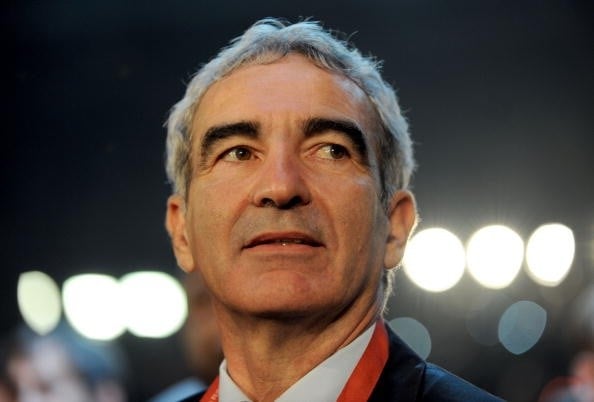
Raymond Domenech Net Worth: Why Estimates Vary Wildly for the French Manager
Raymond Domenech, a name synonymous with French football for decades, first as a tenacious player and later as the often-controversial manager of the national team, has seen his financial standing become a topic of considerable speculation. While his career achievements, particularly guiding France to the 2006 FIFA World Cup final, are well-documented, pinning down an exact figure for Raymond Domenech's net worth proves to be a challenge. Online estimates range dramatically, from a modest six figures to several millions of dollars. This article delves into his illustrious career, explores the potential sources of his wealth, and explains why there's such a significant disparity in the reported figures for his financial portfolio.
Born on January 24, 1952, in Lyon, France, Raymond Domenech's journey through professional football began in an era vastly different from today's multi-million-dollar contracts. His career trajectory, encompassing both playing and management, offers a fascinating look into how wealth is accumulated in the sport, and why public figures' finances are often shrouded in a veil of estimation.
The Playing Days: Laying the Foundation for Future Wealth
Domenech's playing career kicked off in 1969 with his hometown club, Lyon. For nearly a decade, he established himself as a reliable full-back, making an impressive 246 appearances and scoring 7 goals for the club. In the 1970s, footballer salaries, while respectable, were a far cry from the astronomical figures seen today. Players earned a good living, often able to invest in property or local businesses, but they weren't accumulating the generational wealth that top-tier athletes do in the 21st century. This initial phase of his career, while foundational, would likely not have contributed significantly to a multi-million-dollar net worth on its own.
After his impactful stint at Lyon, Domenech moved to Strasbourg in 1977, contributing to 128 games and scoring 4 goals. He then had shorter tenures with Paris Saint-Germain (one season, 1981), Bordeaux (two seasons), and Mulhouse (one season) before hanging up his boots in the mid-1980s. Throughout the 1970s, he also represented the French national team, earning eight caps. While representing his country was a point of national pride, the financial remuneration for international appearances was also much lower than what modern players command.
For more detailed insights into this period, you might find Raymond Domenech's Wealth: Journey from Lyon Player to National Manager a valuable resource.
Transition to Management: A New Chapter and Income Peaks
Upon retiring as a player, Domenech wasted no time transitioning into management, a move that would ultimately see his earning potential significantly increase. He took the reins at Mulhouse, one of his former clubs, managing them until 1989. His success there led him back to Lyon, this time as manager, a role he held until 1993.
Following his club management roles, Domenech spent over a decade working with local youth teams, a period that likely involved stable but not exceptionally high earnings. However, the true financial inflection point in his career arrived in 2004 when he was appointed manager of the French national team. Managing a national squad, especially one with France's pedigree, is a highly prestigious and lucrative position. National team coaches typically earn substantial salaries, often tied to performance bonuses for major tournaments.
His tenure with Les Bleus was a rollercoaster. He famously led them to the 2006 FIFA World Cup final, where they narrowly lost to Italy in a penalty shootout. This period would have been the absolute peak of his earning potential, with significant base salary and likely performance-based bonuses for reaching the final. However, the subsequent 2010 World Cup in South Africa became a widely publicized disaster, marred by player boycotts and Domenech's controversial refusal to shake the opposing coach's hand after France's elimination. This turbulent exit, coupled with widespread public criticism, likely impacted his marketability and future earning opportunities, at least in the short term. He was dismissed for serious misconduct following the tournament. After his high-profile national team role, his managerial career saw a brief, less impactful return with FC Nantes in 2020-2021.
Deconstructing the Net Worth Discrepancies: Why Estimates Vary Wildly
The core question regarding Raymond Domenech's net worth is why estimates fluctuate so wildly. Some sources cite figures as high as $10 million, while others suggest a range between $100,000 and $1 million, and still others land around $4.52 million. This significant variance stems from several key factors:
- Lack of Public Disclosure: Unlike publicly traded companies, individuals like Raymond Domenech are not required to disclose their financial assets, liabilities, or income. Any figures presented online are, by necessity, estimates.
- Different Methodologies: Various celebrity net worth websites and algorithms use different approaches. Some might aggregate publicly available information on known salaries (which are often estimates themselves), endorsements, and property holdings. Others might employ more sophisticated models that attempt to factor in taxes, investments, and expenditures, but these are still based on assumptions. For example, an estimate might consider his peak national team salary for a certain number of years without accurately accounting for his overall financial management.
- Timing of Estimates: The reported net worth figures are often snapshots in time. An estimate from 2024, 2025, or 2026 can reflect different financial periods, investments, or even post-career ventures that may or may not be publicly known. Wealth can fluctuate based on market conditions, investments, and personal spending.
- Private Spending and Lifestyle: A significant portion of a public figure's actual net worth is determined by their personal spending habits, real estate investments, tax obligations, and other private expenditures. Without access to this information, any net worth calculation remains an educated guess. A person earning a high salary could still have a lower net worth if their expenses are equally high, or if they haven't made savvy investments.
- The "Assets Minus Liabilities" Conundrum: True net worth is calculated as total assets (what someone owns: property, investments, cash) minus total liabilities (what someone owes: mortgages, loans). Estimators rarely have comprehensive information on both sides of this equation for private individuals.
Therefore, while it's easy to track his career path, accurately quantifying his accumulated wealth presents a challenge that leads to the diverse figures reported across various platforms.
Beyond the Numbers: Sources of Wealth and Financial Prudence
While precise figures are elusive, we can confidently identify the primary sources contributing to Raymond Domenech's net worth:
- Playing Salaries: His earnings as a professional footballer for Lyon, Strasbourg, PSG, Bordeaux, and Mulhouse, primarily in the 1970s and early 80s.
- Managerial Salaries: Income from managing Mulhouse, Lyon, youth teams, and most notably, his substantial salary as the head coach of the French national team from 2004 to 2010, and briefly with FC Nantes.
- Post-Career Appearances/Media Work: After his high-profile managerial career, former national team coaches often engage in punditry, motivational speaking, or media appearances, which can provide additional income streams. While his controversial exit might have initially limited some opportunities, his continued presence in football discussions suggests ongoing engagement.
- Investments: Like many individuals with significant earnings, it is reasonable to assume Domenech would have made various investments in real estate, stocks, or other ventures over his decades-long career.
For athletes and public figures, managing wealth effectively is crucial. High earning periods are often finite, making prudent financial planning, diversification of investments, and careful expenditure essential for long-term financial security. Even with a reputation for controversy, a consistent career in professional football at various levels provides a solid financial foundation.
For an updated perspective on his current financial standing, consider reading How Much Is Raymond Domenech Worth? Latest 2025-2026 Net Worth Update.
Conclusion
Raymond Domenech's career as both a player and a manager is one of longevity and significant impact on French football. From his early days as a steadfast defender for Lyon to leading the national team to a World Cup final, his journey is undeniable. The wide range of estimates for Raymond Domenech's net worth underscores the inherent difficulty in precisely quantifying the wealth of private individuals, especially those whose peak earning years occurred decades ago. While official figures remain undisclosed, his sustained career at the highest levels of professional football, particularly his six-year stint as national team manager, suggests a comfortable financial standing, likely in the multi-million dollar range, accumulated through decades of hard work and dedication to the sport. Ultimately, his legacy is perhaps best measured not by his net worth, but by the indelible mark he left on French football history.
